A lethal injection at Florida State Prison has ended the life of Donald Dillbeck, closing a 44-year saga of violence, systemic failure, and protracted legal debate that claimed two innocent lives. The execution, carried out at 6:13 p.m. on February 23, marks Florida’s 100th since reinstating capital punishment and its first in over three and a half years.
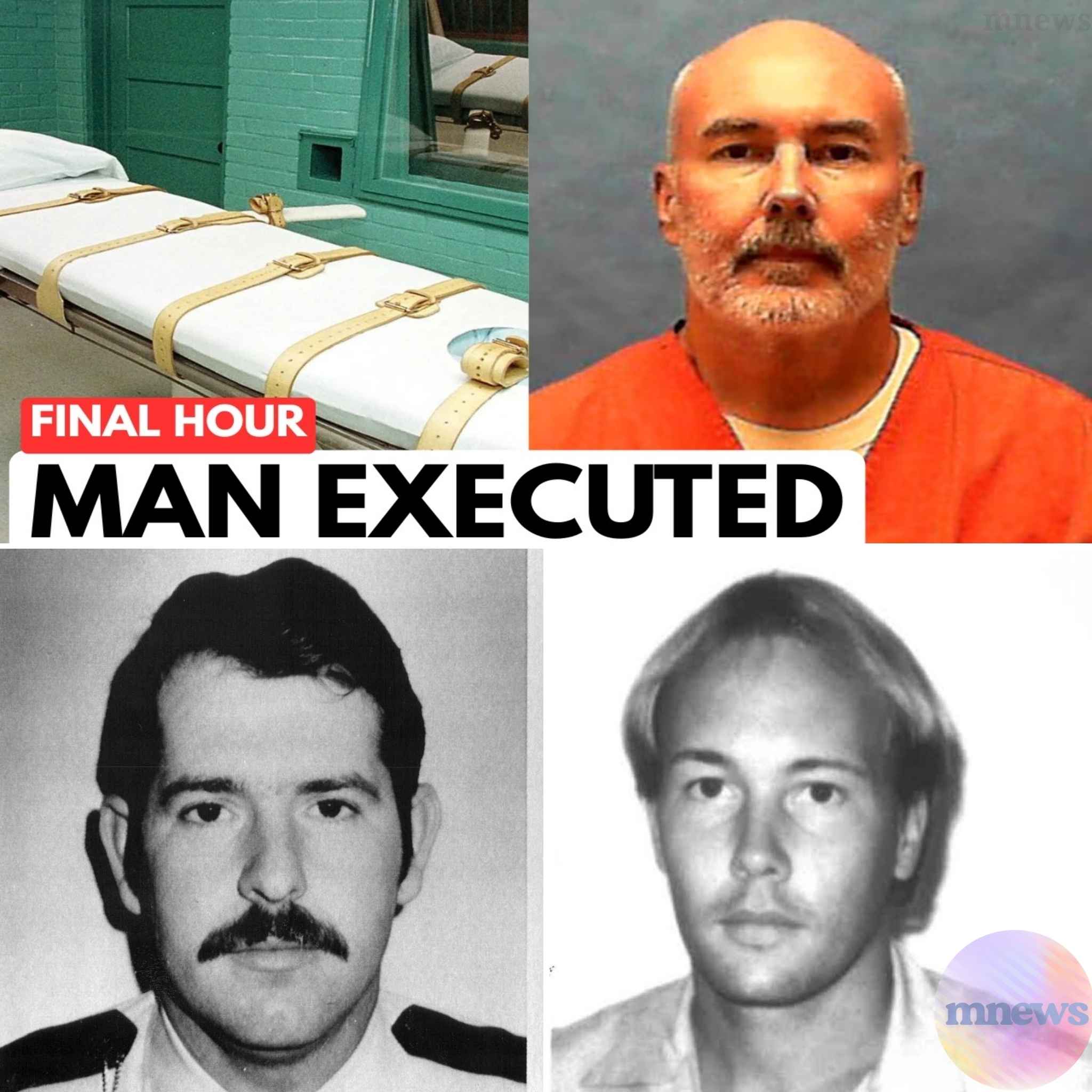
Dillbeck, 59, spent 32 years on death row for the 1990 murder of Faye Vann, a crime committed while he was an escaped prisoner. His final words acknowledged the pain he caused. “I know I hurt people when I was young. I really messed up,” he stated before the lethal drugs were administered.
His path to the execution chamber began decades earlier. At age 15 in 1979, Dillbeck killed Lee County Sheriff’s Deputy Dwight Lynn Hall during a struggle after a routine suspicious person call. A troubled runaway from a broken home, Dillbeck pleaded guilty and received a life sentence.
That life sentence, however, did not protect the public. Despite a violent record that included a prior escape attempt, prison officials placed Dillbeck in a minimum-security facility by 1990. He was participating in an off-site vocational program in Quincy when he simply walked away.
Hours after his escape on June 24, 1990, Dillbeck arrived at a Tallahassee mall parking lot. There, he stabbed 44-year-old Faye Vann to death and stole her car as she waited for family. Her murder sparked outrage and led to the firing of three corrections officials.
Convicted for Vann’s murder, Dillbeck’s death sentence was recommended by an 8-4 jury vote, a now-unconstitutional practice. The sentence was finalized in 1995, beginning a 32-year legal odyssey. His attorneys fought the execution on two major grounds, both ultimately rejected.

They argued a 2016 Supreme Court ruling, which found Florida’s death penalty statute unconstitutional, should apply retroactively to him. Courts ruled it did not, as his sentence was finalized before the cutoff date. This created an arbitrary line that one dissenting justice criticized.
The defense also contended Dillbeck suffered from a neurodevelopmental disorder due to prenatal alcohol exposure. They presented expert testimony that this brain damage impaired his reasoning and moral judgment, making his execution unconstitutional. Florida’s Supreme Court was unmoved.
Governor Ron DeSantis signed his death warrant in January. After last-minute appeals were denied by both the Florida and U.S. Supreme Courts, the process moved forward. Dillbeck spent his final day calmly, consuming a last meal of fried shrimp, pie, and ice cream.
The execution proceeded without incident. Witnesses reported he closed his eyes shortly after the injection began at 6:02 p.m., breathed deeply, and was pronounced dead eleven minutes later. The case reignites perennial debates about justice, punishment, and systemic responsibility.
It forces examination of how a teenager who killed an officer was later able to escape and kill again. It questions the meaning of a three-decade delay between sentence and execution. For the families of Deputy Hall and Faye Vann, it represents a long-awaited, painful conclusion.

Outside the prison, approximately twenty protesters gathered, citing Dillbeck’s childhood and neurological condition as reasons to abolish capital punishment. Others saw the execution as necessary justice for victims of violent crime. The philosophical divide remains as deep as ever.
Dwight Lynn Hall was 31, a deputy doing his duty. Faye Vann was 44, a woman waiting in a car. Their stories, often overshadowed by legal procedure, are the foundation of this decades-long narrative. Their lives were abruptly taken by a man the state first failed to contain.
Donald Dillbeck’s story is a grim tapestry of personal tragedy, horrific choice, institutional error, and relentless legal machinery. It underscores the complex, often unsatisfying search for justice when irreversible harm has been done by and to multiple parties.
The curtains have closed on Florida’s 100th execution. The questions it raised about age, accountability, brain science, and the administration of ultimate punishment will linger far longer in the courts and the conscience of the state. The conversation, as always, continues.