A fresh and deeply personal crisis has erupted within the House of Windsor, centering on the official identities of Prince Harry’s children and threatening to sever the last fragile threads of trust with the monarchy. The controversy, described by insiders as a “silent power struggle,” involves the delayed issuance of British passports for Archie and Lilibet Mountbatten-Windsor, a process that has ignited accusations of institutional interference and reopened the Sussexes’ most profound wounds.
According to sources close to the couple, the passport applications formally listed the children’s names with their official titles, His and Her Royal Highness, and the surname Sussex. For Harry, this was a critical step to cement his children’s birthright in British law, creating an unambiguous legal record of their status as prince and princess. The routine administrative task, however, allegedly stalled for months under a cloud of bureaucratic hesitation.
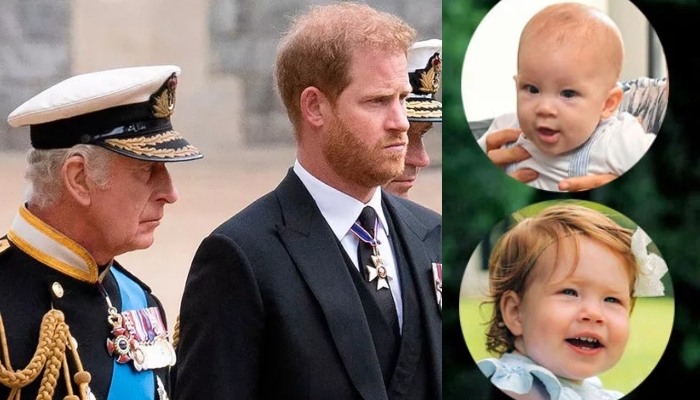
The delay, stretching far beyond standard processing times with what were described as repeated technical excuses, reportedly sent Harry into a fury. He interpreted the holdup as a deliberate, institutionally-sanctioned reluctance to formally recognize his children’s HRH styling—a potent symbol of royal legitimacy and their place in the line of succession. This perceived obstruction struck at the core of his long-stated grievances about the palace prioritizing protocol over family.
Palace officials have issued a firm denial, stating unequivocally that King Charles was not involved in any passport processing decisions. They attribute the delay to standard administrative procedures. Yet, the timing of the passports’ eventual issuance has fueled intense speculation, as it came swiftly after reports that the Sussexes’ legal team prepared to invoke GDPR data laws to uncover internal communications about the case.
The heart of the conflict lies in the politically sensitive nature of the HRH title itself. While Archie and Lilibet became prince and princess upon Charles’s accession, the use of the HRH style remains contentious. Harry and Meghan themselves do not use their own HRH titles publicly, raising a complex question about whether their children should carry a designation their parents have set aside.
This debate has fractured royal observers. One camp views the titles as an inalienable birthright, while another argues that honors tied to royal service are incongruous for children being raised as private citizens in California. The passport delay, therefore, became a proxy battle over this unresolved constitutional and familial dilemma.
The emotional stakes for Harry are monumental. Insiders claim the situation felt like a direct attack on his ability to protect his family, reviving his deepest feelings of betrayal. Reports even suggest that in his frustration, he briefly explored legally changing the family surname to Spencer, a profoundly symbolic gesture linking his children to Princess Diana’s legacy and away from the Windsor name.
Beyond the immediate family drama, the incident casts a long shadow over the monarchy’s future. It highlights the unresolved “identity crisis” of the Sussex family: are Archie and Lilibet private American children or potential future working royals? Harry’s stated desire is to preserve their options, allowing them to choose their path as adults—a position that now collides with the institution’s own modernization pressures.
The controversy inevitably turns eyes toward the future reign of Prince William. Analysts speculate that William may pursue a more streamlined monarchy, potentially reforming rules around titles for non-working royals living abroad. This possibility introduces a chilling prospect for Harry: that the titles he fought to secure could one day be removed by his own brother, an act that would likely obliterate any chance of reconciliation.
For now, the passports have been issued, but the fundamental conflict remains utterly unresolved. The episode proves that every document, every title, pulls Harry’s children back into a political arena they did not choose. It underscores that the bitter feud between the Sussexes and the institution is now a battle over legacy, fought on the paperwork of the next generation.
This is more than a bureaucratic dispute; it is a constitutional and emotional fault line. The delay, whether administrative or deliberate, has reinforced the vast gulf between Harry’s vision for his family and the palace’s protocols. It ensures that the children, growing up an ocean away from Buckingham Palace, will remain potent symbols in a feud that shows no sign of abating, with their very identities at the center of a cold war for the soul of the modern monarchy.