BREAKING: In a historic execution, Joseph Corkran, a 49-year-old man convicted of murdering four individuals, was executed in Indiana early this morning. After 15 years on death row, Corkran’s final words were chillingly indifferent: “Not really. Let’s get this over with,” as he faced the lethal injection that sealed his fate.
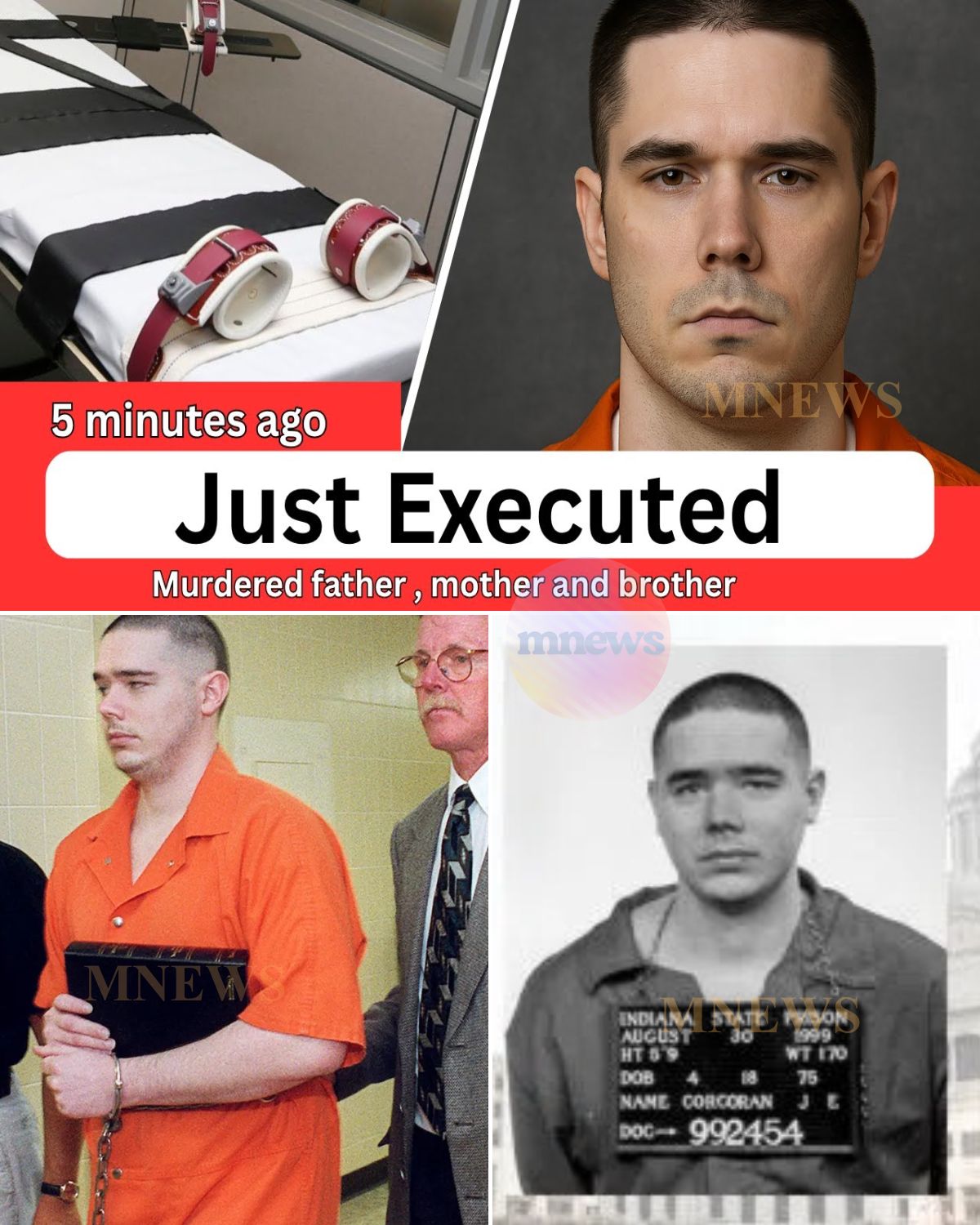
Corkran’s execution marked the first in Indiana since 2009, reigniting fierce debates over the death penalty, particularly concerning mental illness. His case is notorious, having begun with the brutal killings of his parents in 1992, for which he was acquitted, only to later commit a horrific massacre in 1997.
The Indiana Department of Correction confirmed the execution was completed at 12:44 a.m. in Michigan City. Attorney General Todd Rokita stated that “justice was provided to his victims,” emphasizing the long journey Corkran’s case took through the judicial system.
Corkran’s mental health has been a focal point throughout his legal battles. Diagnosed with paranoid schizophrenia, his defense argued that executing him was unconstitutional and cruel. Despite this, the courts consistently ruled that he understood the consequences of his actions.

The 1997 murders, which claimed the lives of Corkran’s brother and three friends, shocked the Fort Wayne community. Witnesses reported a calm demeanor as he committed the acts, raising questions about his mental state and the failure of the system to protect him and others from his violent tendencies.
As the execution date approached, Corkran’s attorneys filed numerous appeals, all of which were denied. His sister, Kelly Ernst, who lost both her brother and fiancé in the 1997 killings, chose to stay away from the execution, stating that it would bring her no peace or closure.
Corkran’s last meal consisted of a pint of Ben and Jerry’s ice cream, which he consumed slowly, displaying an eerie calmness. His final moments were marked by a lack of emotion, even as he met with family members through glass, assuring them he had made peace.

The execution has reignited debates over capital punishment in Indiana, with activists on both sides of the issue voicing their opinions outside the prison. Some argue that mental illness should exempt individuals from the death penalty, while others see it as a necessary measure for heinous crimes.
At 12:36 a.m., Corkran was administered a lethal dose of pentobarbital, leading to his death just moments later. The prison staff prepared the execution chamber for the next case, a stark reminder of the ongoing cycle of violence and justice in America.
As dawn broke over Michigan City, the community grappled with the aftermath of Corkran’s execution. For many, it symbolizes the complex intersection of mental illness, crime, and justice, a narrative that continues to unfold in the American legal system.