A Missouri man was executed Tuesday evening for the 2004 murders of his girlfriend and her three young children, maintaining his innocence until the end as his supporters argued serious evidentiary flaws plagued the case. Leonard “Raheem” Taylor, 58, received a lethal injection at the Potosi Correctional Center in Bonne Terre and was pronounced dead at 6:16 p.m., concluding a nearly two-decade legal battle that hinged on a fiercely contested timeline.
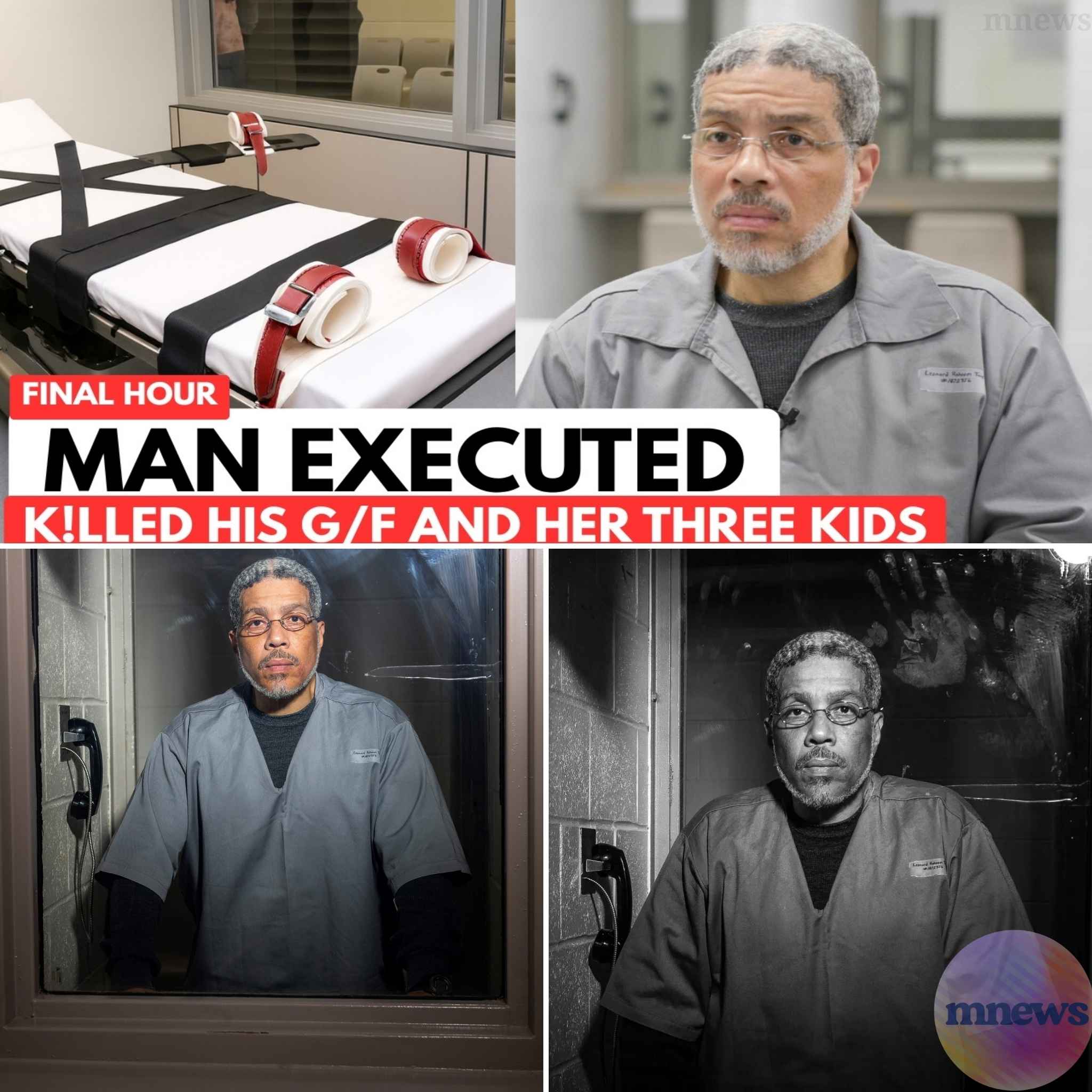
The execution proceeded after a final, unsuccessful appeal to the U.S. Supreme Court and a clemency denial from Governor Mike Parson. Taylor’s spiritual advisor was barred from the chamber, and he offered no final spoken statement. Instead, he left a written declaration, opening with verses from the Quran and stating, “Muslims don’t die, we live eternally… Death is not your enemy. It is your destiny.”
Taylor was convicted in 2008 of four counts of first-degree murder for the deaths of Angela Rowe, 28, and her children: Alexis, 10; AcQreya, 6; and Tyrese, 5. Their bodies were discovered in their Jennings home on December 3, 2004, all victims of gunshot wounds described by authorities as execution-style. Prosecutors argued Taylor killed Rowe during a domestic dispute and then murdered the children because they were witnesses.
The state’s case rested heavily on a contested time of death. A security camera recorded Taylor boarding a flight to California on November 26, 2004—a full week before the bodies were found. If the victims died after his departure, he could not have been the killer. The original medical examiner estimated a time of death just 2-3 days before discovery, placing it after Taylor left Missouri.
By trial, that examiner, Dr. Philip Burch, revised his estimate, testifying that the victims could have been dead for up to three weeks. He cited the home’s running air conditioning, which slowed decomposition. This revised timeline placed Taylor in-state at the time of the murders and became a cornerstone of the prosecution’s successful argument.

Taylor’s defense and innocence advocates persistently challenged the evidence. His brother, Perry Taylor, whose initial statement to police claiming a confession was pivotal for prosecutors, recanted that testimony at trial, alleging police coercion. He died in 2015. No murder weapon was ever recovered, despite a claim that Taylor discarded one in a sewer.
Further, Taylor’s daughter and her mother stated they participated in phone calls with Angela Rowe and one child while Taylor was in California, suggesting the family was alive after he left. An independent forensic pathologist, Dr. Jane Turner, later submitted an affidavit supporting the original, shorter time-of-death estimate.
In the weeks leading to the execution, the Midwest Innocence Project pleaded with Governor Parson, warning the state was “going to execute an innocent man.” The NAACP and other groups joined calls for a stay. Parson’s office dismissed the claims as “self-serving,” and courts at every level declined to intervene, leaving the conviction intact.
For the victims’ families, the execution brought a fraught conclusion. Angela Rowe’s sister, Gjun Rowe, told a reporter afterward, “Justice is served.” She then immediately added, “Not really,” a poignant reflection of a loss that began in 2004. The family had long awaited the carrying out of the sentence.
In his final days, Taylor was described by an advocate as calm and positive, accepting of his fate. The Missouri Department of Corrections did not release details of his final meal. Witnesses reported he moved his feet and took several deep breaths as the lethal drug, pentobarbital, was administered before all movement ceased.
Following the execution, the Midwest Innocence Project reiterated its stance, asserting Taylor’s life was “stolen by unreliable testimony and unscientific conclusions.” They cited national statistics indicating over 190 death row exonerations since 1973, including four from Missouri, highlighting persistent concerns about wrongful convictions.
The state of Missouri has now carried out three executions since November 2022. The case of Leonard Taylor leaves behind a complex legacy, juxtaposing a completed legal process and a family’s search for closure against enduring questions about forensic science, witness reliability, and the finality of the death penalty. The names of Angela, Alexis, AcQreya, and Tyrese remain at the center of a story that continues to provoke debate about justice, evidence, and doubt.