Florida has executed notorious serial killer Frank Athen Walls by lethal injection on December 18th, 2025, ending a 38-year death row saga. Walls, implicated in multiple brutal murders from the 1980s, faced his final moments at Florida State Prison, marking a rare and prolonged closure to one of the state’s longest-running cases.
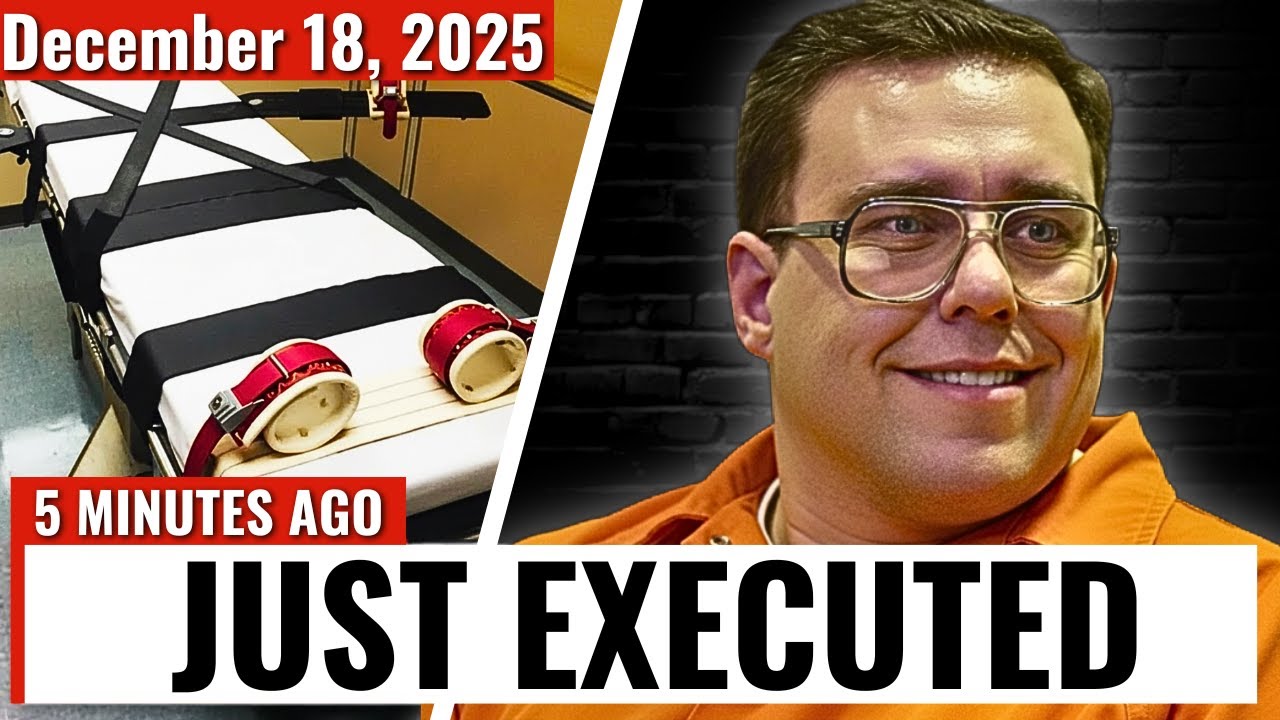
Frank Athen Walls, once a low-wage dishwasher living with uneasy roommates, embarked on a violent killing spree between 1985 and 1987. His first murder, committed at just 17, set a chilling pattern of cold-blooded violence that would terrorize Florida communities for years.
The first victim, Tommy Lou Whitten, was attacked mercilessly on a tranquil beach. Walls approached silently and slashed her throat, leaving her to bleed out on white sand before fleeing with her vehicle. This horrifying act was the beginning of a reign of terror that would unfold with brutal intensity.
Eighteen months later, Walls’ violence escalated in Wright, Florida. Cynthia Sue Condra fell victim to a savage attack where Walls stabbed her an appalling 21 times. This unrestrained fury reflected a disturbing desire not just to 𝓀𝒾𝓁𝓁 but to dominate and brutalize his victims utterly.
The grisly pattern continued in 1987, when Walls committed two more horrifying crimes. Audrey Gaji became a victim of home invasion, rape, and ultimately murder. His chilling decision to return and 𝓀𝒾𝓁𝓁 her after initially leaving her alive revealed a cold calculation rarely seen in violent criminals.
Walls’ final known murders unfolded in a terrifying home intrusion involving Edward Alger and Anne Louise Peterson. Walls forced Anne to bind her boyfriend before attacking both victims with brutal control, culminating in a deadly shooting and a cruel execution that shocked the community relentlessly.
Despite overwhelming evidence, Walls eluded final justice for decades. Fingerprints and DNA collected from crime scenes only slowly pieced together the full scope of his atrocities. Advanced forensic technology ultimately played a pivotal role in securing his conviction and extinguishing his horrific legacy.

Following multiple trials and appeals, Walls was sentenced to death in the early 1990s. Throughout nearly four decades on death row, he made several attempts to contest his execution, claiming intellectual disability — a tactic the courts decisively rejected based on his prior IQ assessments.
On December 18th, 2025, at 58 years old, Walls faced his long-delayed punishment. His final hours were marked by compliance and quiet acceptance, including a last visit, spiritual guidance, and a final meal of steak, chicken, vegetables, baked potato, cheesecake, and juice — a somber farewell before the end.
The execution by lethal injection was prolonged, lasting about 15 minutes, far longer than typical procedures and suggesting visible distress. This unusual duration added a grim note to the historic event, underscoring the intense human 𝒹𝓇𝒶𝓂𝒶 behind capital punishment protocols.
Walls’ death represents Florida’s nineteenth execution of 2025, setting a state record within a single calendar year. His execution closes a chapter on a haunting criminal saga that profoundly affected the families of victims and the wider justice system across decades.
The impact of Frank Athen Walls’ crimes and eventual execution reverberates throughout Florida’s legal history. It highlights the prolonged struggle of law enforcement to bring a calculating serial killer to justice and the complexity of the death penalty process in the modern era.

As the state moves forward, the memories of the victims—young Tommy Lou, Cynthia Sue, Audrey, Edward, and Anne—stand as a sobering reminder of the devastating consequences of unchecked brutality. Walls’ execution does not erase their suffering but offers a measure of final justice.
Florida’s criminal justice system faced extraordinary challenges in this case, balancing years of appeals and scientific advances while striving to uphold lawful execution standards. Walls’ execution underscores ongoing debates surrounding capital punishment, mental health claims, and procedural integrity.
This historic execution capped nearly four decades of investigation, trial, and legal wrangling. It underscores the perseverance of victims’ families seeking closure and the relentless efforts of prosecutors and forensic experts determined to secure a definitive conclusion.
Frank Athen Walls’ case serves as a stark example of the depths of human depravity and the long road to justice. His death marks a pivotal, if somber, milestone in Florida’s ongoing battle against violent crime and the administration of the ultimate punishment.
With his execution, the state asserts a firm, if controversial, stance on justice for heinous crimes. Walls’ protracted journey from youthful offender to executed serial killer encapsulates decades of legal scrutiny, public fear, and relentless pursuit of accountability.
As Florida reflec
ts on this milestone, it stands as a testament to the legal system’s endurance but also to the tragic human cost embedded in the story. The tragic lives lost and the prolonged litigation spotlight the complexities at the intersection of crime, punishment, and societal protection.
The conclusion of Walls’ story does not lessen the scars left behind but signals a final chapter in a saga marked by brutality, terror, and long-awaited justice. Florida’s record-setting execution year now includes the end of a dark, decades-long chapter in its criminal history.