For nearly four centuries, the preserved corpse of a medieval queen lay exposed in one of England’s most sacred royal sites, transforming from a revered monarch into a macabre tourist curiosity. The extraordinary posthumous journey of Catherine of Valois, queen consort to the legendary King Henry V, stands as one of the most bizarre episodes in British royal history, a saga born from accidental neglect and shifting cultural attitudes toward the dead.
Catherine, born in 1401 as a daughter of French King Charles VI, was a pivotal figure in the Hundred Years’ War. Her 1420 marriage to Henry V was a strategic union meant to cement peace between England and France following his military triumphs. Crowned Queen of England, her reign was tragically short; Henry V died in 1422, leaving Catherine a widow at just twenty-one with an infant son, the future Henry VI. Her later secret marriage to Welsh courtier Owen Tudor would forge a dynasty, making her the grandmother of Henry VII.
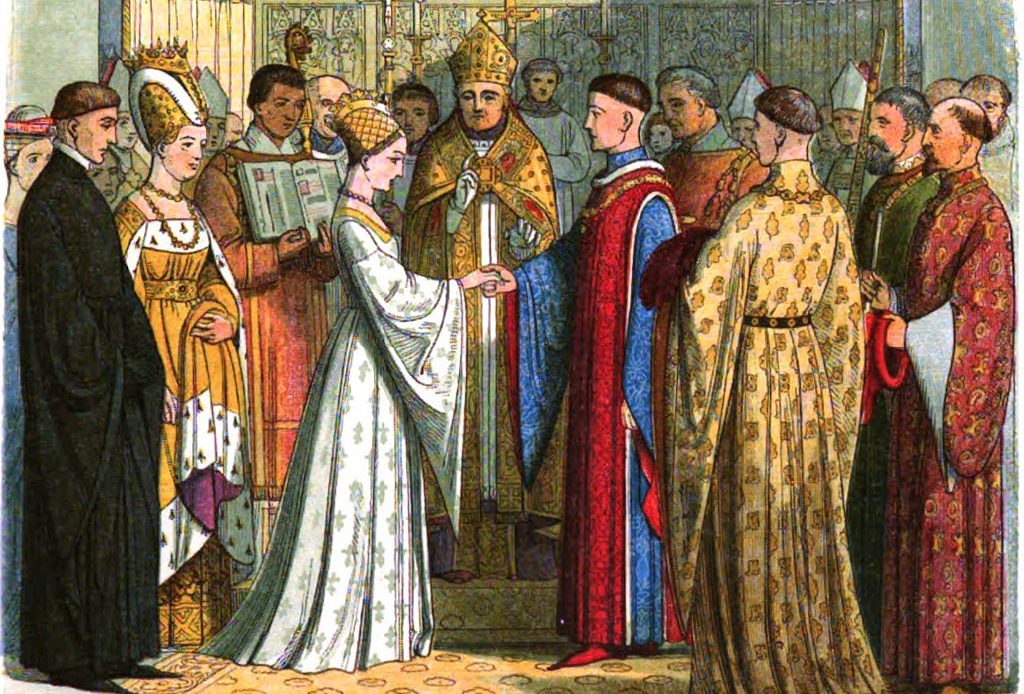
Following her death in 1437 at age thirty-five, Catherine received a full state funeral and was interred with honor in Westminster Abbey near the shrine of Edward the Confessor. For decades, her rest was undisturbed. The chain of events that led to her exposure began around 1485 during significant renovations within the Abbey. Workers constructing the elaborate chantry chapel for Henry V’s tomb needed space, forcing the dismantling of nearby graves, including Catherine’s.
Her coffin was removed but, in a critical oversight, was never re-interred. It was simply left above ground near her former husband’s new monument. As the wooden coffin decayed over the following century, the lid eventually broke open. The Abbey’s environment and her burial wrappings led to a natural mummification process, leaving her remains shockingly visible to passersby.

By the 1600s, the queen’s body had become a notorious fixture for visitors touring the Abbey’s historic sights. Staff would guide the curious to peer inside the damaged casket. The most famous account comes from the diarist Samuel Pepys, who visited in February 1669. He recorded being shown the body, noting he could see her face, and famously wrote that he kissed her lips on his birthday, a gesture reflecting the era’s vastly different sensibilities toward historical remains.
For generations, the site served as a morbid attraction. Tourists and antiquarians reported seeing bones and fragments of her burial shroud within the deteriorating coffin. The situation persisted through the Tudor, Stuart, and Georgian eras, a period where royal tombs were often treated as historical artifacts rather than inviolable graves.
A gradual shift in public sentiment during the 18th century finally prompted action. The notion of a queen’s corpse serving as a public spectacle became increasingly viewed as undignified and grotesque. Under orders from the Abbey’s authorities, a long-overdue resolution was enacted in 1778. Her remains were carefully gathered and placed into a new coffin.
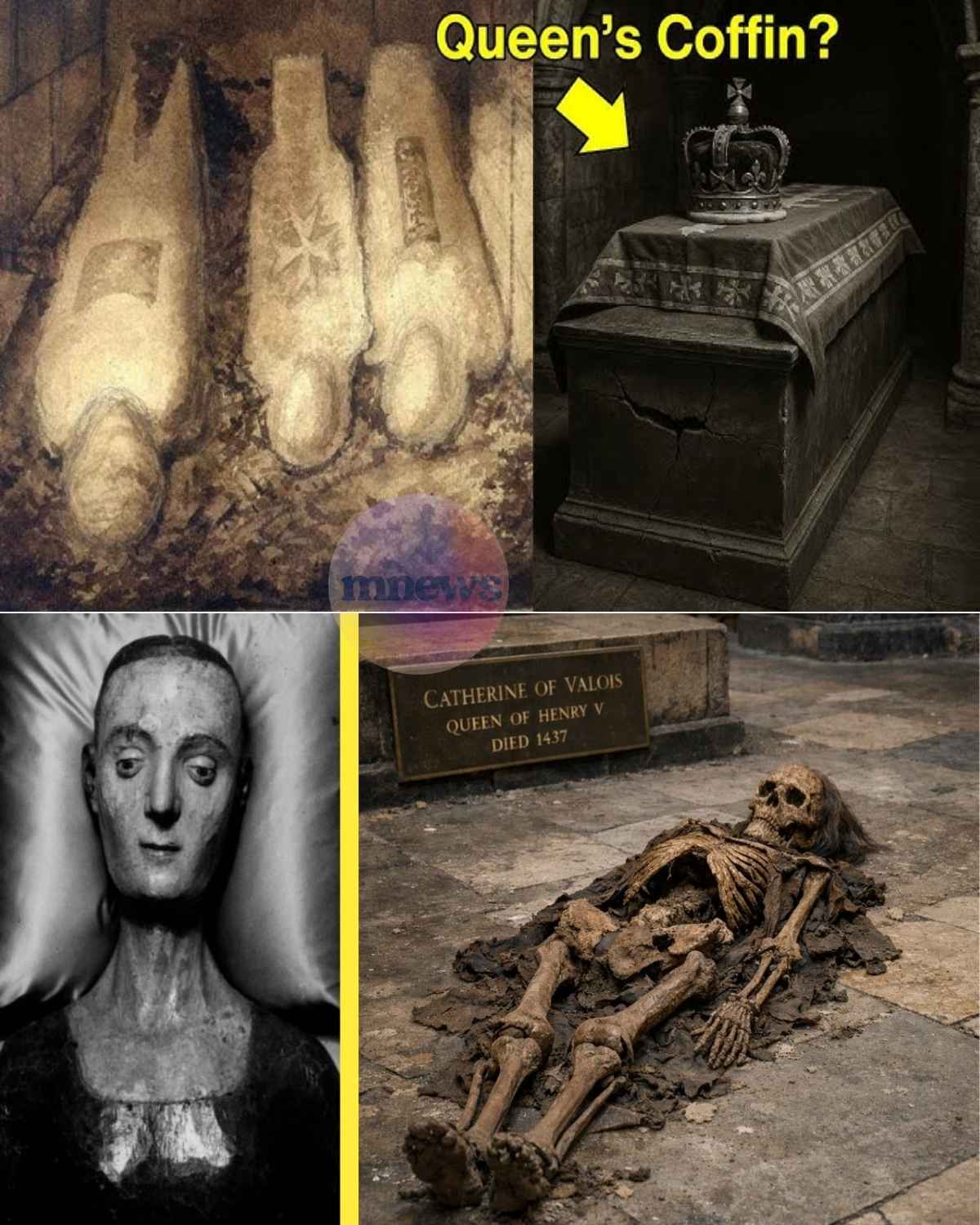
This coffin was then sealed within a vault beneath the Abbey’s floor near the Henry V Chapel, finally granting Catherine of Valois a proper burial after 341 years of exposure. The act closed a profoundly strange chapter, rectifying an indignity born not from malice but from bureaucratic neglect and historical happenstance.
Catherine’s legacy, however, extends far beyond her troubled tomb. Through her lineage with Owen Tudor, she is the direct ancestor of the Tudor monarchs, including Henry VIII and Elizabeth I, fundamentally shaping England’s political and religious trajectory. Her descendants would rule England for over a century.
Today, a simple floor plaque in the Abbey marks her final, secure resting place. No visible trace remains of the centuries when her body lay in open view, a sobering reminder of how easily the sacred can become spectacle. Her story is a powerful testament to the fragility of legacy and the unpredictable ways history treats even its most prominent figures, where accident and changing norms can conspire to rewrite the narrative of death itself. The queen’s long journey from honored burial to public curiosity and back to rest underscores that royal history is often written not just in life, but in the long, strange fate of what remains.