A new political axis has formed in the heart of Europe, threatening to fundamentally reshape the bloc’s internal dynamics and foreign policy direction. In a move analysts are calling a seismic shift, the governments of Italy and Hungary have announced a formal strategic partnership, binding two of the EU’s most influential and often disruptive members.
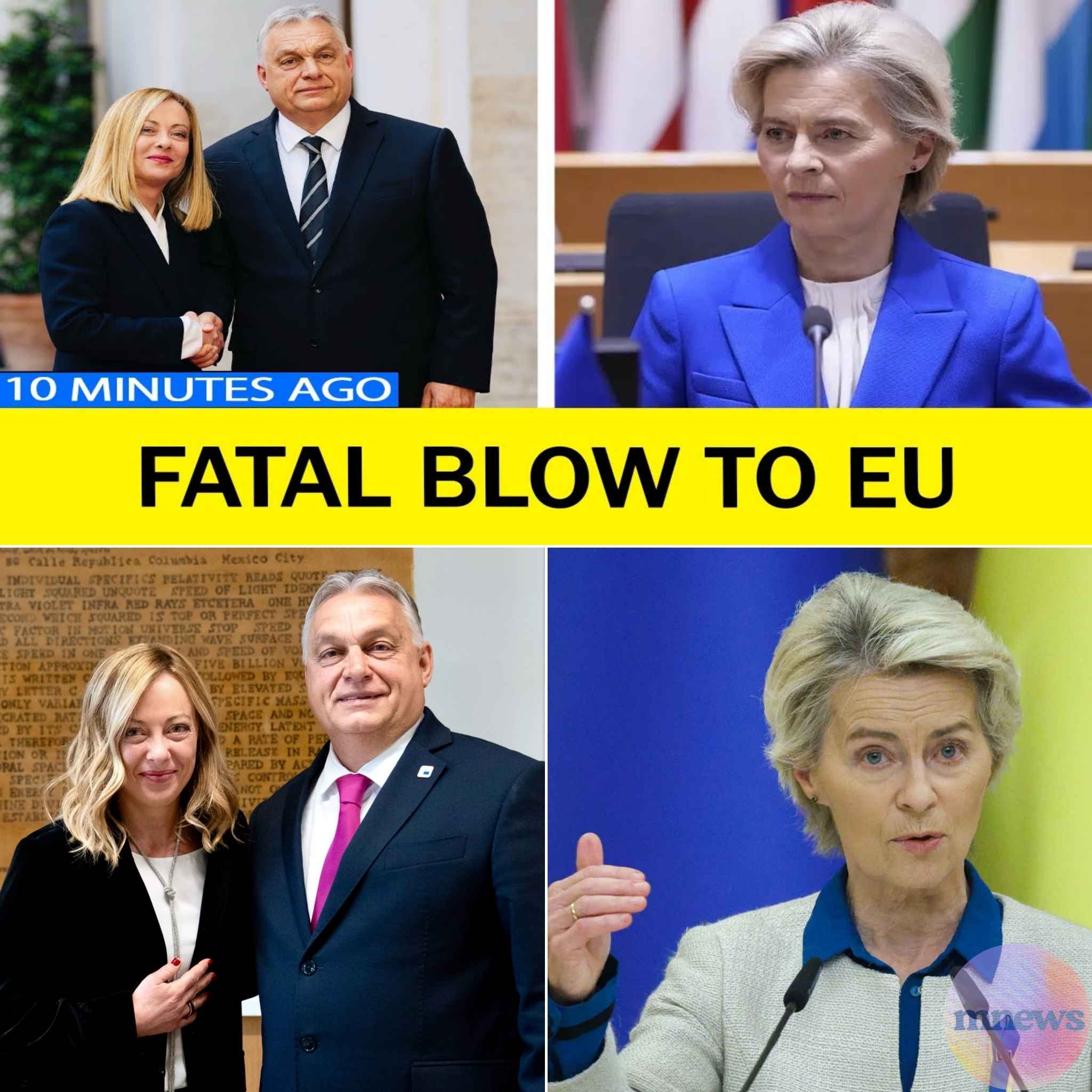
The agreement, signed today in Rome by Prime Minister Giorgia Meloni and Prime Minister Viktor Orbán, goes far beyond typical bilateral cooperation. It establishes a unified framework on key issues, including migration, energy policy, and national sovereignty, directly challenging the consensus-driven approach of Brussels. This pact represents a crystallization of the nationalist-conservative vision long championed by both leaders.
Sources within the Berlaymont building describe an atmosphere of profound alarm. The alliance effectively creates a powerful bloc within the European Council, capable of stalling or redirecting legislation on a host of sensitive topics. With Poland’s previous government sharing this ideological stance, the EU’s eastern flank now presents a coordinated challenge to Franco-German leadership.
“This is not just a partnership; it is a political declaration of war against the federalist project,” stated a senior EU diplomat speaking on condition of anonymity. “Meloni and Orbán are building a counter-institutional force. They intend to rewrite the rules from within, using their combined veto power as a battering ram.”

The immediate ramifications are most acute in the realm of migration. Both nations have been the loudest critics of the EU’s mandatory relocation quotas. Their new pact includes plans for joint detention facilities outside EU territory and a coordinated push to defund NGOs operating search-and-rescue missions in the Mediterranean, a policy likely to face fierce legal challenges.
Energy independence forms another cornerstone. The agreement prioritizes the development of southern gas corridors, reducing reliance on both Russian supplies and the EU’s collective purchasing mechanisms. This move underscores a deliberate pivot away from European solidarity towards nationally negotiated deals, potentially undermining the single market.
Perhaps most destabilizing is the unified stance on Ukraine. While Italy remains formally supportive of Kyiv, Orbán’s open opposition to further aid and sanctions against Russia now finds a more sympathetic partner in Rome. The alliance strengthens the hand of those arguing for a negotiated settlement, potentially fracturing the EU’s carefully maintained unity as military aid packages come up for renewal.
Financial markets reacted with immediate unease, with the euro dipping against major currencies. The specter of institutional paralysis raises questions about the EU’s ability to act decisively in future crises. Bond spreads between German and Italian debt widened slightly, reflecting investor concern over Italy’s deepening alignment with Hungary, which has long been embroiled in rule-of-law disputes.

The partnership also carries significant cultural and symbolic weight. It frames the future of Europe as a contest between what Meloni has termed “the patriotic right” and the “bureaucratic elites” of Brussels. This narrative is expected to resonate powerfully ahead of the upcoming European Parliament elections, providing a template for other dissenting member states.
Reaction from other capitals has been swift and severe. Paris and Berlin issued a rare joint statement expressing “deep concern” and emphasizing the “indivisibility of European values.” In contrast, leaders from Slovakia and the Czech Republic offered cautious, non-committal responses, indicating the potential for further divisions within the Visegrad Group.
Legal experts are already scrutinizing the pact’s compatibility with EU treaty obligations, particularly regarding foreign policy. The creation of a mini-bloc that pre-negotiates positions before European summits could be seen as violating the principle of sincere cooperation. However, enforcing this against two member states would be an unprecedented political and legal battle.
The long-term implications are profound. This alliance institutionalizes the divide between the EU’s western founders and its newer eastern and southern members. It moves political conflict from the periphery to the very core of decision-making, ensuring that every major initiative will face a hardened, organized opposition with a distinct vision for Europe’s future.
As the dust settles from today’s announcement, the European Union finds itself at a historic crossroads. The Meloni-Orbán axis has not merely altered the political calculus; it has shattered the existing balance of power. The coming months will test whether the bloc can accommodate this new force or if its very foundations are now in jeopardy. The earthquake has struck; the aftershocks will define European politics for a generation.