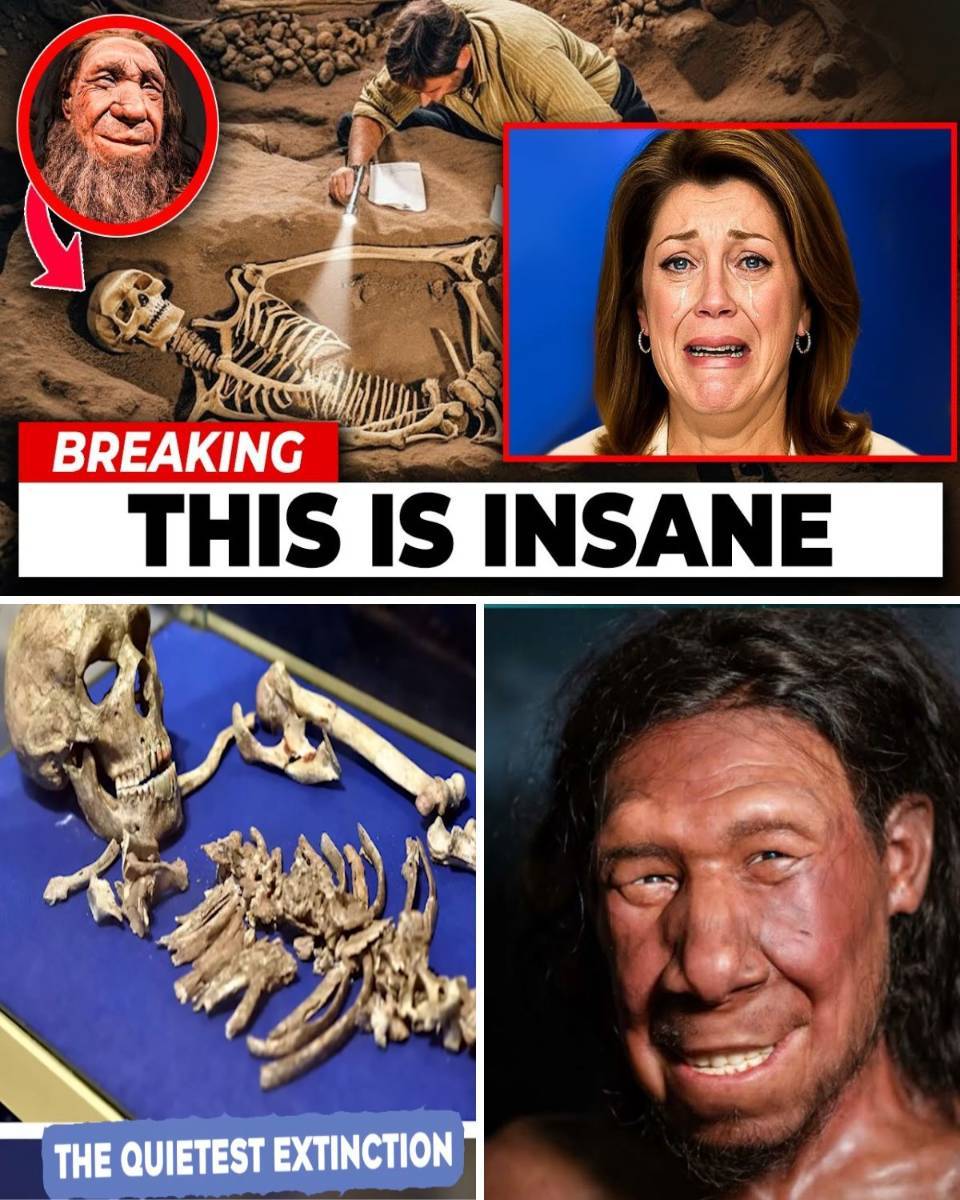
Scientists have finally unraveled the mystery of the Neanderthals’ extinction, revealing that their demise was not due to a single catastrophic event but rather a slow genetic decline. Recent breakthroughs in ancient DNA analysis have illuminated how these once-thriving communities faded into silence, leaving behind a legacy intertwined with modern humans.
 For over 300,000 years, Neanderthals roamed Europe and Asia, showcasing remarkable adaptability and survival skills. They hunted large game, crafted tools, and built shelters, enduring harsh climates that would challenge even the most resilient of modern humans. Yet, around 40,000 years ago, they vanished, leaving behind a haunting silence that puzzled archaeologists for generations.
Recent archaeological discoveries in England and France have shed light on the lives of these ancient beings. Excavations revealed fire pits, tools, and even burial sites that suggest a deep understanding of life and death among Neanderthals. Their existence was not primitive; they displayed emotional intelligence and social bonds, challenging long-held stereotypes of brutishness.
The quest to understand their extinction led researchers down many paths, from theories of climate change to conflict with early modern humans. However, none provided a satisfactory explanation. The narrative of a violent extermination by Homo sapiens crumbled under scrutiny, as evidence pointed to coexistence rather than conflict.

In the late 20th century, scientists turned their attention to the genetic material preserved in Neanderthal bones. However, early attempts to extract DNA were thwarted by contamination and degradation. It wasn’t until the early 2000s that a dedicated team at the Max Planck Institute for Evolutionary Anthropology succeeded in sequencing the Neanderthal genome, revealing a profound connection to modern humans.
The results were astonishing. Nearly everyone outside Africa carries a small percentage of Neanderthal DNA, indicating interbreeding between the two species. This genetic inheritance is a testament to a shared history, suggesting that Neanderthals did not simply disappear but merged into the human lineage, leaving a subtle yet significant mark on our biology.
 Yet, the DNA analysis revealed a darker truth. As Neanderthal populations dwindled, their gene pool became increasingly homogenous, leading to genetic fragility. Isolated groups faced higher risks of disease and environmental changes, ultimately sealing their fate. Their extinction was a gradual process, a slow erosion of genetic diversity that modern humans inadvertently contributed to.
The findings also highlighted the social structure of Neanderthal communities. Genetic mapping revealed familial ties among individuals, indicating that they lived in cohesive groups rather than as isolated loners. This communal lifestyle fostered cooperation but also made them vulnerable to the strains of a shrinking population.
 As researchers continue to explore the implications of Neanderthal DNA in modern humans, questions arise about our own future. If a resilient species like the Neanderthals could succumb to genetic decline, what does that say about our own vulnerabilities in an increasingly interconnected world?
The legacy of the Neanderthals now serves as both a cautionary tale and a reminder of our shared history. Their story, once shrouded in mystery and silence, now resonates within us, urging reflection on the delicate balance of survival and the consequences of our connections.