Archaeologists have made a series of staggering discoveries beneath the surface of Easter Island, fundamentally rewriting the history of one of the world’s most enigmatic sites. New excavations and technological analysis reveal a civilization of profound sophistication, resilience, and artistry, whose true story has been buried for centuries.
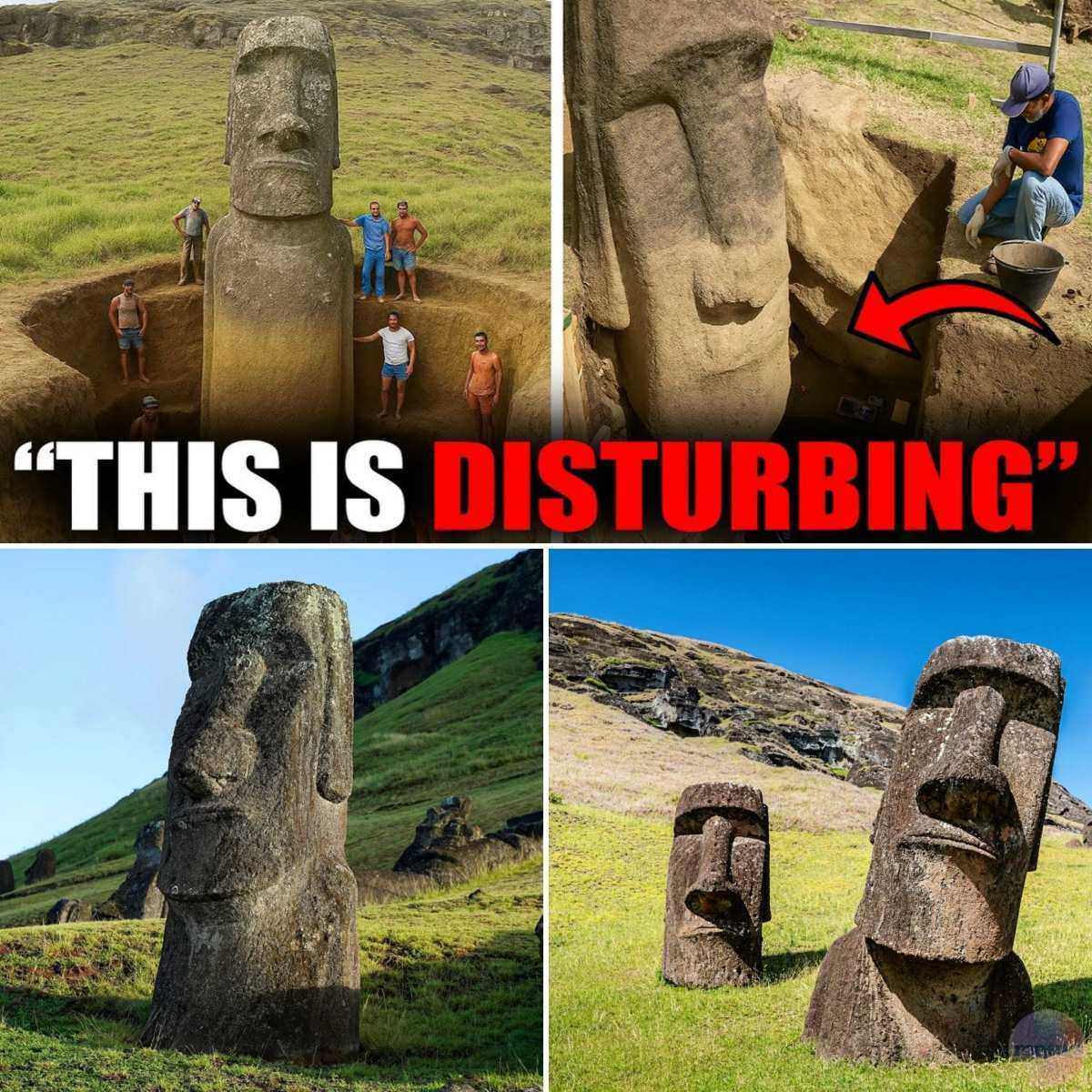
The iconic stone heads, known as Moai, are merely the tips of monumental full-bodied statues buried deep within the earth. Excavations led by the Easter Island Statue Project have uncovered torsos extending up to thirty feet underground, adorned with intricate ceremonial carvings on their backs. These are not primitive carvings but the work of master artists and engineers.
These buried bodies reveal astonishing details, including carved arms folded across stomachs and, in many cases, massive red stone headdresses called pukao. The statues were precisely positioned to face inland, watching over village communities, a deliberate placement that speaks to a complex spiritual and social order.
Perhaps more startling was the discovery of vast, carefully sealed pits filled with vibrant red pigment, dated to a period long after the island’s supposed ecological collapse. This finding proves the Rapa Nui people maintained large-scale, organized cultural projects for centuries beyond previous estimates, challenging the narrative of a sudden societal downfall.
Beneath the ceremonial platforms, or ahu, researchers found secret, ingeniously engineered burial chambers. These waterproof tombs, constructed with precision stonework, held the remains of elites alongside artifacts like obsidian tools and shell jewelry from across the Pacific, indicating a connected and hierarchical society.
A pivotal revelation came with the reconstruction of the statues’ eyes. Archaeologists found that the hollow sockets once held masterfully crafted eyes of white coral with dark stone pupils. When installed, these eyes would have made the Moai appear terrifyingly alive, transforming them into watchful guardians as described in oral traditions.

Modern genetic research has delivered the most profound correction to the historical record. DNA evidence shows the population remained stable and healthy until European contact. The catastrophic decline from thousands to just 111 people by 1877 was caused by introduced diseases and brutal slave raids, not internal warfare or resource depletion.
This evidence reframes the island’s history as one of cultural endurance, not self-inflicted collapse. The abandoned tools and fallen statues likely date from this nineteenth-century catastrophe, when traditional knowledge was lost within a generation due to the devastating population loss.
Today, ground-penetrating radar and satellite imagery are revealing dozens of hidden structures, ancient roads, and settlements, proving the island was far more extensively developed than ever imagined. Each technological advance peels back another layer, showing a society capable of remarkable adaptation and continuity.
The cumulative weight of these findings paints a new portrait of Easter Island. It is not a cautionary tale of ecological mismanagement but a testament to human ingenuity and resilience in the face of ultimately overwhelming external forces. The true story of the Rapa Nui people, only now coming to light, is one of brilliant artistry and profound survival.