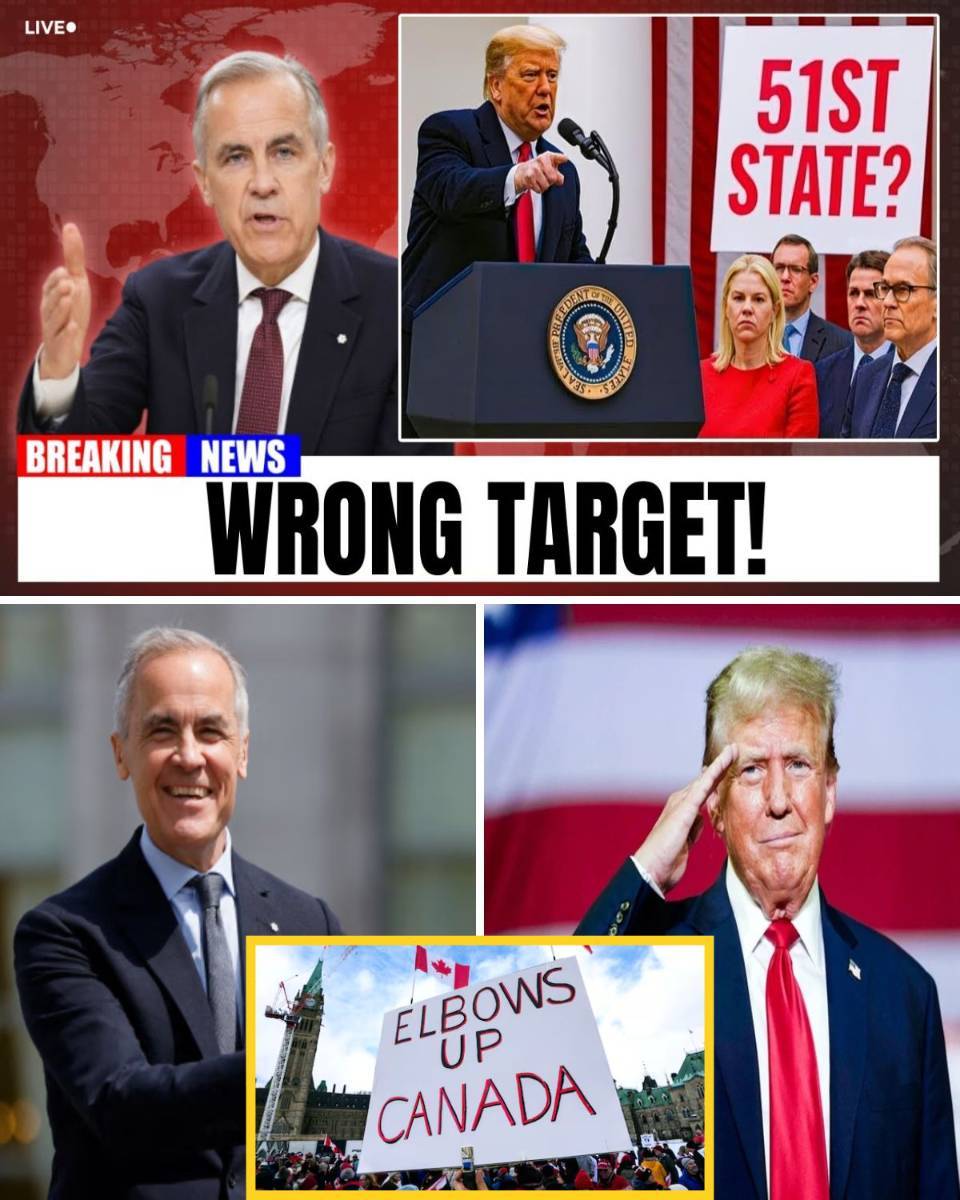

Canada has delivered a stunning counterpunch to Washington amid escalating trade tensions, reporting a surprising trade surplus for September—the first since January. As U.S. threats loom large, Ottawa’s unexpected resilience signals a potential shift in the North American economic landscape, leaving policymakers scrambling for answers.
 In a striking turn of events, the U.S. trade representative, Jameson Greer, issued a stark warning that the United States could withdraw from the USMCA by 2026. This statement, far from being a mere passing remark, reverberated through diplomatic channels, signaling Washington’s readiness to rethink its foundational trade agreements with Canada and Mexico.
President Donald Trump further escalated tensions, suggesting Canada should be treated like a 51st state. This blunt rhetoric sent shockwaves through investor circles, as many had relied on the stability of North American cooperation. The implications of such comments hinted at a tightening grip from Washington, expecting Canada to yield under pressure.
Amid this backdrop, the U.S. ambassador raised alarms about Canada’s political advertising rules, suggesting they could influence cross-border communications. Ottawa’s rebuttal stalled ongoing discussions, leading to the unprecedented consideration of splitting the USMCA into separate agreements with Canada and Mexico, a scenario few had anticipated.
 However, rather than succumbing to U.S. pressure, Canada began to adapt and evolve. Economic resilience emerged as a defining trait, with foreign direct investments surging to nearly $1.5 trillion. Canadian firms started reshaping their supply chains, creating routes that bypassed the U.S. market, thereby reducing their vulnerability to Washington’s tactics.
One of the most dramatic shifts occurred in Newfoundland and Labrador, where over half of the region’s oil production was redirected to Europe. This marked a significant transformation from a time when less than 10% of its output flowed across the Atlantic, illustrating Canada’s broader strategy to diversify its export markets.
As Canada fortified its economic standing, the U.S. began feeling the repercussions of its own strategies. Manufacturing numbers in the U.S. saw a decline over nine consecutive months, the longest stretch since the 2008 financial crisis. This downturn raised concerns about the health of the American economy, as corporations reconsidered their operations in response to rising trade tensions.
 Consumer behavior also reflected the growing uncertainty, with Cyber Monday sales rising only modestly, indicating tightened budgets among households. Major corporations such as Costco found themselves embroiled in legal challenges against the U.S. government over tariff refunds, further complicating the economic landscape.
While Canada positioned itself as a beacon of stability, the U.S. faced increasing policy risks. Multinational corporations began viewing Canada as an anchor for operations amid the volatility at home. Canada’s extensive network of free trade agreements made it an attractive destination for global businesses seeking predictability.
 In the midst of these tensions, Canadian officials reaffirmed their commitment to protecting their economic interests. The Minister of Industry emphasized the importance of direct engagement with companies and labor leaders, signaling that Ottawa would not back down easily.
As the landscape continues to shift, observers are left pondering the long-term implications of Washington’s aggressive tactics. Could the U.S. inadvertently be fostering a stronger competitor at its own doorstep? The answers are unfolding as both nations prepare for a politically charged year ahead.
With Prime Minister Mark Carney meeting President Trump and Mexican President Claudia Shinebomb, the stakes are higher than ever. As negotiations loom, the potential for redefining the continent’s economic architecture hangs in the balance, leaving both countries at a critical crossroads.
As this story develops, the world watches closely, eager to see how the dynamics of North American trade will evolve amidst these unprecedented challenges.