A closed-door congressional hearing has inadvertently revealed a seismic shift in the balance of North American trade power, exposing not American strength but a growing desperation as Canadian policies prove unexpectedly resilient.
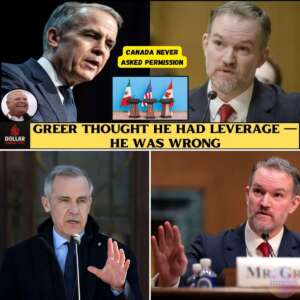
U.S. Trade Representative Jameson Greer’s testimony, intended to outline conditions for the CUSMA renewal, instead provided a stark inventory of U.S. vulnerabilities. The detailed list of demands to Canada functioned as a confession, highlighting sectors where American industries are losing ground.
The document, presented on December 17th, 2025, targeted specific Canadian successes: dairy supply management, the Online Streaming Act, provincial alcohol restrictions, and procurement rules. Analysts note these are not failing systems but policies performing precisely as designed to protect Canadian interests.
In the dairy sector, Greer demanded expanded U.S. access, arguing Canadian exports undercut American producers. The unstated reality is that American suppliers have consistently failed to fill existing tariff-free quotas, unable to compete on quality, price, or supply stability against Canada’s managed system.
The demand regarding Canada’s streaming legislation is particularly revealing. The law requires global platforms like Netflix and Spotify to invest directly in Canadian content, a move Greer framed as discriminatory. In effect, Washington admitted the policy is working, forcing U.S. tech giants to reinvest extracted value.

Perhaps the most significant miscalculation exposed is the efficacy of provincial retaliation. After U.S. tariffs were imposed, provincial liquor boards independently pulled American spirits from shelves, causing catastrophic sales drops for major U.S. producers without a single federal order from Ottawa.
This distributed economic pressure created a crisis that Washington has no mechanism to negotiate away. U.S. Ambassador Pete Hoekstra’s complaint that Canada was being “mean and nasty” underscored the administration’s frustration with a tactic it could not counter.
Greer further criticized procurement rules in Ontario, Quebec, and British Columbia, as well as Canadian customs requirements. These complaints translate to an objection that Canadian provinces are governing in their voters’ interests rather than prioritizing U.S. exporter convenience.
The core of Washington’s dilemma was laid bare in a single contradictory admission from Greer. He confirmed U.S. exports to Canada and Mexico have surged over 50% since 2020, with American business and labor groups urging the agreement’s renewal, yet declared a simple renewal “not in the national interest.”
This contradiction reveals the true American grievance: CUSMA, while boosting U.S. exports, also grants Canada too much sovereign space to act independently. The agreement’s balance, protecting Canadian policies, is now perceived in Washington as an unacceptable constraint on dominance.

The timeline of this confrontation shows a disciplined Canadian strategy. After U.S. tariffs were re-imposed in early 2025, Ottawa responded with calibrated silence while provinces executed targeted retaliation. Prime Minister Mark Carney’s later removal of a digital services tax was read in Washington as weakness but was a strategic concession preserving greater leverage.
Greer’s list has now handed Ottawa a clear roadmap of American pressure points. The demands come with no offered incentives, no guaranteed tariff relief, and no acknowledgment of Canadian priorities, relying on an outdated assumption of Canadian acquiescence.
That assumption is collapsing. Deeply integrated North American supply chains mean disruption now harms Washington as much as Ottawa. Canada is negotiating from a position of interdependence, not desperation, and is increasingly willing to let the U.S. feel the consequences of escalation.
The next six months will determine whether North American trade continues under old hierarchies or new principles of balance. For the first time in decades, Washington is facing a neighbor that no longer asks permission to defend its interests, but simply acts—and listens politely to complaints while moving forward.